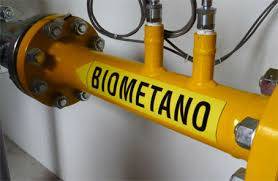
The idea is this: orodize biofuel with low environmental impact, using tons of organic waste by converting it into energy for vehicles, business vehicles and public transportation. So Milan is about to launch the challenge as part of its energy transition strategy to power as many as 39 thousand cars, or two and a half times those on the road, by recycling almost all of the 200 thousand tons of waste produced in its territory.
A perspective illustrated by the study entitled “Biomethane. Potentialities in the Metropolitan City of Milan and the Role of Gruppo Cap,” carried out by Kyoto Club and presented today at Palazzo Isimbardi during the conference “Circular Economy: from Perspective to Industrial Strategy,” in the presence of Ato (Territorial Ambit Office) and the Metropolitan City of Milan.
“What emerges from the study, and it is part of the goal we set for ourselves, is the great potential of our area, where we have excellent companies and facilities that can work in synergy with the public administration to make economy and regenerate the environment. We believe that our role is no longer just one of authorization, but above all that of a facilitating body and promoter of innovation,” says Roberto Maviglia, deputy councilor of the Metropolitan City of Milan.
Biomethane is among the renewable sources specified by the European Union to meet the Paris Agreement goal of keeping global warming below 2°C and zeroing out climate-changing emissions by 2050. The memorandum of understanding signed by the Metropolitan City of Milan and the Cap group, manager of the integrated water service for the 135 municipalities in the Milan hinterland, has precisely the goal of building an economic model capable of producing biomethane from the wet section of Forsu (Organic Fraction of Municipal Solid Waste), extending it to the sewage treatment plants already present in the area, with the advantage of maximizing efficiency and limiting land consumption.
Biomethane is a biofuel with a low environmental impact, with properties fully equivalent to methane of fossil origin, which can therefore be stored and distributed through existing infrastructure, and can be used to fuel cars, company fleets or public vehicles, thus responding to the sustainable mobility strategies envisaged by the Pums, Urban Plan for Sustainable Mobility of the Metropolitan City of Milan.
Its production brings both economic and environmental benefits. According to Ministry of Economic Development data for 2018, compared with 5,448 million Sm3 (standard cubic meters) of methane produced, Italy imported 67,872 million Sm3, 92.6 percent of the total. Instead, the production of biomethane from organic matrices would be entirely domestic, and the biomethane would be used at the place of production, activating a truly km 0 supply chain.
According to the most recent Ispra report, the Metropolitan City of Milan produces about 215,000 tons/year of wet waste and has a currently authorized anaerobic treatment plant capacity of 90,000 tons. Thanks to Cap Group’s facilities, an additional 107 thousand tons/year of wet waste could be treated through anaerobic digestion processes, without the need to build new facilities or new production plants.
Gruppo Cap is Italy’s first single utility in the Integrated Water Service (IWSS) management sector and has 40 wastewater treatment plants that, upon authorization from the competent authority, can be used to “digest” Forsu, agricultural waste or agribusiness waste from the Milanese hinterland.
The amount of biomethane produced by Cap Group’s plants would potentially be able to fuel about 39,000 cars, about 2.5 times the number of CNG cars on the road in the Metropolitan City of Milan, to kick-start a sustainable mobility model aimed at reducing consumption and especially emissions.
The Metropolitan City of Milan has seized this great opportunity by issuing permits for biomethane production and extending anaerobic digestive capacity also to the treatment of waste from the agro-industrial and livestock cycle, and from the urban wet fraction.
This is a prospect that opens a door to the future: in fact, it is expected that in the coming years in the Metropolitan City of Milan the wet fraction could grow to 638 thousand tons/year (as opposed to 215 thousand at present), and this would offer the possibility of developing the area’s plant capacity.